
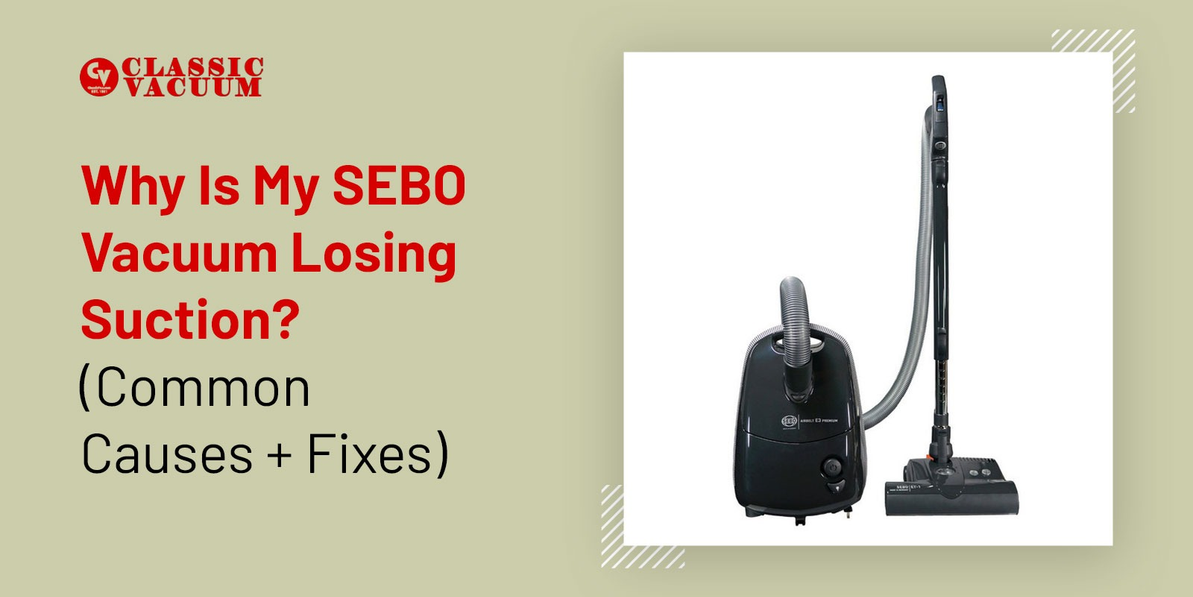
Why Is My SEBO Vacuum Losing Suction? (Common Causes + Fixes)
SEBO vacuums, built to last, are engineered in Germany to run reliably for decades. But even the most well-built machine needs the right care to perform at its best. If your SEBO vacuum is losing suction, the good news is that the problem is almost always fixable in minutes without any special tools.
At Classic Vacuum, we work with SEBO machines every day. Whether you own an Automatic X, a Felix, or an Airbelt, suction loss follows a predictable pattern. Once you know where to look, diagnosis is straightforward.
In this guide, we cover the five most common reasons your SEBO vacuum is losing suction, how to pinpoint the exact cause, and step-by-step fixes that will have your machine running like new.
How SEBO's Suction System Works
Before diving into causes, it helps to understand the airflow path inside your SEBO vacuum.
Air travels in one continuous circuit: floor head → telescopic wand → hose → dust bag → pre-motor filter → motor → exhaust filter → out.
Suction loss can occur at any point along this path. SEBO's bypass motor design means the motor is cooled by a separate airstream, which offers durability advantages, but it also means a blocked airflow path will reduce cleaning power well before any motor damage occurs. This is actually a protective feature, not a flaw.
Understanding this circuit is the key to fast diagnosis: you start at the floor head and work your way back to the motor.
The Most Common Reasons SEBO Vacuums Lose Suction
1. Full or Incorrectly Fitted Dust Bag
The dust bag is the single most common cause of suction loss and the easiest to fix. SEBO bags are highly efficient, but they restrict airflow as they fill. Most users wait until the bag looks visibly full or until the indicator light triggers. By that point, suction has already dropped noticeably.
SEBO recommends changing the bag at approximately two-thirds capacity, not when full. A nearly full bag restricts airflow enough to measurably reduce cleaning performance on both carpet and hard floors.
An incorrectly fitted bag causes a different but equally damaging problem: air bypasses the bag entirely, circulating unfiltered dust through the machine and out through the exhaust. Always ensure the bag collar is fully seated and locked before use.
Model-specific bag references:
- SEBO Automatic X series: Type G bags
- SEBO Felix series: Type K bags
- SEBO Airbelt D/E series: Type E bags
Fix: Replace the bag. Inspect the bag collar and ensure it clicks fully into the machine before closing the bag compartment door.
2. Clogged or Saturated Filter
SEBO vacuums use S-Class filtration, a sealed multi-layer filter system designed to capture fine dust, allergens, and particles down to 0.3 microns. This level of filtration is exceptional, but it also means the filter accumulates particles quickly, especially in pet-owning or allergy-conscious households.
SEBO filters are not washable. Attempting to wash them damages the filter media and compromises the sealed filtration system. Replacement is the correct maintenance step.
Signs your filter needs replacing:
- Musty or dusty smell even when the bag is new
- Visible grey coating on the filter pleats
- Suction loss that persists even after a fresh bag is installed
- Increased motor noise under load
Replacement interval: Every 12 months under normal household use. Every 6–9 months if you have pets or allergy sufferers in the home.
Fix: Replace both the pre-motor (S-Class) filter and the exhaust filter at the same time. Classic Vacuum stocks genuine SEBO filters for all current models.
3. Blockage in the Hose or Floor Head
Physical blockages are the second most common cause of sudden suction loss. Unlike filter saturation (which causes gradual decline), a blockage causes a sharp, immediate drop in suction (often during mid-clean).
Common culprits include balled-up socks, dense clumps of pet hair, carpet fibres compacted at the floor head entry, and small objects partially lodged in the telescopic wand.
How to test for a blockage:
- Detach the hose from both the machine and the floor head
- Hold your hand over the machine's hose port. If suction is strong here, the blockage is in the hose or floor head
- If suction is also weak at the machine port, the issue is in the bag, filter, or motor section
Fix: Use a broom handle or a straightened wire hanger to push through the hose and wand. Check the floor head entry point and brush roll channel. For stubborn blockages in the floor head, detach the brush roll to gain clear access.
4. Tangled or Worn Brush Roll
Hair, thread, and carpet fibres wrap around the brush roll over time, creating drag that affects both cleaning performance and airflow through the floor head. A heavily tangled brush roll can reduce effective suction at the carpet surface significantly, even when the machine's actual suction pressure is normal.
SEBO's Automatic X series includes an automatic brush roll protection system. An indicator light triggers when the brush roll jams. If this light is on, the brush roll has stopped spinning to prevent motor damage. This is a feature, not a fault.
Fix: Remove the brush roll (tool-free on most SEBO models as you just press the release tabs). Cut away hair and thread using scissors, working from the centre outward. Check the end caps for compacted debris. Refit and test.
5. Air Leak at a Seal or Connection
Air leaks are less common but often overlooked. A leak anywhere along the airflow path (at the hose connection, bag collar, telescopic wand joint, or floor head coupling) allows unfiltered air to enter or pressurised air to escape, both of which reduce suction at the nozzle.
How to check for air leaks:
- Run the vacuum and move your hand slowly along each connection point
- Feel for air escaping. You can detect even a small leak by hand
- Inspect the hose body for cracks, especially near the cuffs where flexing stress is highest
Fix: Reseat and secure all connections. Check the bag collar seal for deformation. If the hose is cracked, replacement is the correct fix. Tape repairs are temporary and reduce airflow efficiency.
How to Diagnose Where the Suction Loss Is Coming From
Use this quick-reference table to narrow down the cause before you start pulling the machine apart:
|
Symptom |
Likely Cause |
Fix |
|---|---|---|
|
Weak suction everywhere |
Full bag or clogged filter |
Replace bag and/or filter |
|
Suction fine at machine port, weak at floor head |
Hose or floor head blockage |
Clear blockage in hose or floor head |
|
Suction drops on carpet, fine on hard floor |
Brush roll tangle or wrong height setting |
Clean brush roll; adjust height |
|
Suction works then cuts out mid-clean |
Thermal overheating/blockage |
Clear blockage; let cool 30 mins |
|
Burning smell with suction loss |
Motor strain from blockage |
Clear blockage immediately |
|
Machine runs normally but isn't picking up debris |
Brush roll not spinning |
Check brush roll engagement and indicator light |
|
Suction loss only on one surface type |
Height adjustment setting |
Adjust floor head height dial |
Diagnostic order to follow: bag → filter → hose → brush roll → seals → motor. Working through this sequence will resolve over 95% of SEBO suction issues without any professional service.
Step-by-Step Fixes for Each Cause
- Open the bag compartment. Press the bag release tab and slide out the old bag without tipping it. Note the bag collar orientation.
- Fit a new bag of the correct type for your model. Slide the collar fully into the receiver until it clicks. Close the compartment door and verify the indicator light resets.
- Remove the pre-motor filter. On the Automatic X, this is behind the bag compartment door. On the Felix, it is accessible from the rear panel. Replace with a genuine SEBO S-Class filter.
- Detach the hose at both ends. Pass a broom handle through to clear any blockage. Hold the wand sections up to a light to check for obstructions.
- Press the brush roll release tabs on the floor head. Lift out the brush roll. Use scissors to cut away hair wrap and pull clear from both end caps. Refit and confirm free rotation.
- Reassemble all connections. Run the machine and test suction at the floor head before full cleaning resumes.
SEBO's tool-free service design means all of the above steps can be completed without any implements. This is intentional since SEBO machines are designed to be maintained by the owner, not just by technicians.
SEBO Vacuum Maintenance Schedule to Prevent Suction Loss
Preventive maintenance keeps your SEBO performing at full capacity and dramatically extends machine life. Follow this schedule:
|
Frequency |
Task |
|---|---|
|
Every use |
Check bag level indicator; empty or replace if at two-thirds capacity |
|
Monthly |
Inspect hose and floor head entry for partial blockages |
|
Every 6 months |
Remove and clean brush roll; inspect wand joint seals |
|
Every 12 months |
Replace S-Class pre-motor filter and exhaust filter |
|
As needed |
Replace dust bag before indicator triggers for best performance |
SEBO's built-in indicator system (bag full light, brush roll protection light) acts as an on-board maintenance assistant. Respond to indicator lights promptly rather than continuing to run the machine, as doing so reduces suction and increases motor strain.
When Suction Loss Points to a Deeper Problem
If you have worked through every step above and suction remains weak, the issue may lie with the motor or internal seals rather than the airflow path. This is uncommon in well-maintained SEBO machines, but it does occur after many years of heavy use.
Signs that suggest a motor or seal issue rather than a maintenance problem:
- High-pitched whine or grinding noise from the motor
- Burning smell that persists after all blockages are cleared
- Machine is 10+ years old and has never had a service
- Suction loss occurs immediately with a fresh bag and new filter installed
SEBO's repairability is one of the brand's strongest advantages over disposable vacuum brands. Parts are available for machines well over a decade old, and authorised service centres can rebuild motors and replace seals at a fraction of the cost of a new machine.
If you suspect a motor or seal issue, contact Classic Vacuum for an assessment before replacing the machine.
Frequently Asked Questions
1. Can a full bag really reduce SEBO suction that much?
Yes, and more than most people expect. A bag that is two-thirds full creates enough back-pressure to noticeably reduce cleaning performance on carpet. SEBO recommends replacing bags before the indicator light triggers for consistently strong suction.
2. How often should I replace my SEBO filter?
Every 12 months under normal household use. If you have pets or allergy sufferers in the home, every 6–9 months. SEBO filters are not washable, so replacement is the only correct maintenance step. Using a washed or degraded filter compromises the S-Class sealed filtration system.
3. Why does my SEBO vacuum lose suction only on carpet?
This is almost always a brush roll issue. Hair and thread wrap around the brush roll over time, reducing the brush roll's ability to agitate carpet fibres and lift debris into the airflow path. Remove the brush roll, clear any wrap, and refit. Also check that the floor head height setting is correct for your carpet pile depth.
4. Why does my SEBO suction work then stop mid-clean?
This typically indicates the motor's thermal protection system has triggered due to overheating. Overheating is usually caused by a blockage or a heavily soiled filter forcing the motor to work harder. Switch off the machine, clear any blockage, check the filter, and allow 30 minutes for the motor to cool before restarting.
5. Is SEBO suction loss covered under warranty?
Suction loss caused by normal maintenance requirements, like a full bag, clogged filter, and user-cleared blockages, is not covered under SEBO's warranty. These are expected consumable replacements. SEBO's warranty does cover manufacturing defects in the motor, seals, and structural components under normal use conditions.
Final Thoughts
SEBO vacuums are among the most repairable, longest-lasting vacuum cleaners available. They are engineered to perform for 20 years or more with the right care. In almost every case, suction loss traces back to one of five causes: a full bag, a saturated filter, a physical blockage, a tangled brush roll, or an air leak at a connection point.
Work through the diagnostic sequence (bag, filter, hose, brush roll, seals), and you will resolve the problem in under 10 minutes in the vast majority of cases, with no tools and no professional service required.
For genuine SEBO replacement bags, S-Class filters, and brush rolls, Classic Vacuum stocks a full range of parts for every current SEBO model. If your machine needs a more complex assessment, our team is available to help.
Recent Posts
-

SEBO Vacuum Cleaner: The Complete Buying Guide
A good vacuum should make cleaning easier today and still make sense years from now. SEBO has built …16th Sep 2026 -

The Hidden Air Pollutants in Your Home (and How to Remove Them)
You can't smell most of what's actually polluting your air. The obvious stuff (cooking smoke, a must …9th Sep 2026 -

Top Riccar Models for Homes With Dogs and Cats
If you share your home with a dog, a cat, or both, you already know the drill: hair on the couch, da …2nd Sep 2026