What Are Air Kits for Central Vacuum Systems
Air kits, also called air-driven vacuum kits or air turbine vacuum kits, are attachment sets that plug into your existing central vacuum system and use the suction power of your power unit to spin a turbine brush. That spinning turbine agitates carpet fibers and sweeps debris into the airflow path, sending dirt through your in-wall tubing to the central canister rather than recirculating it back into the room.
Unlike electric kits, air kits require no powered hose and no electrical connection at the brush head. That keeps them lightweight, flexible, and compatible with the widest range of central vacuum power units currently on the market.
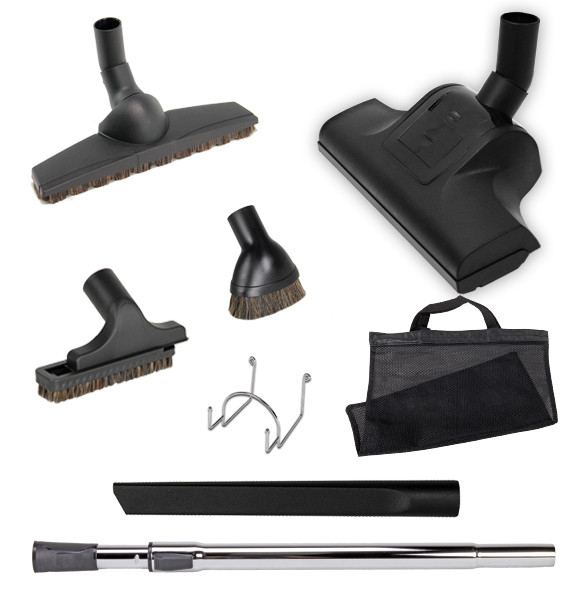
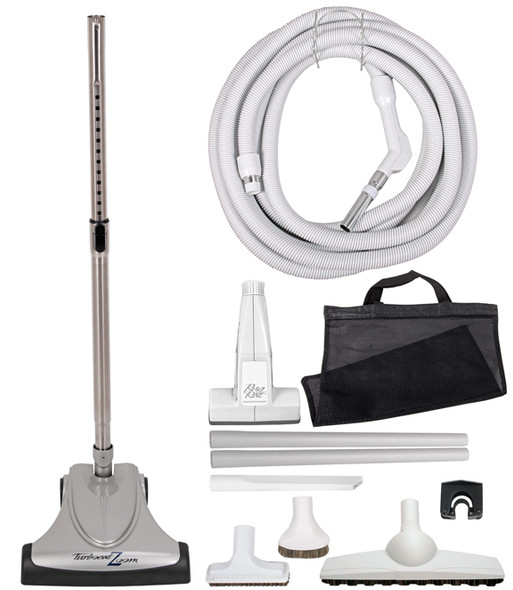
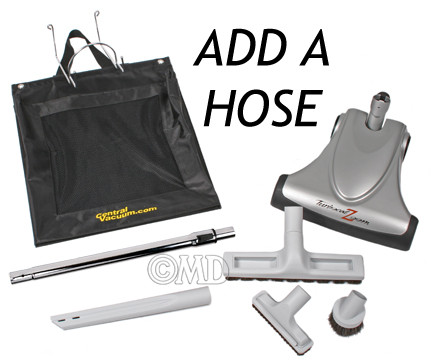
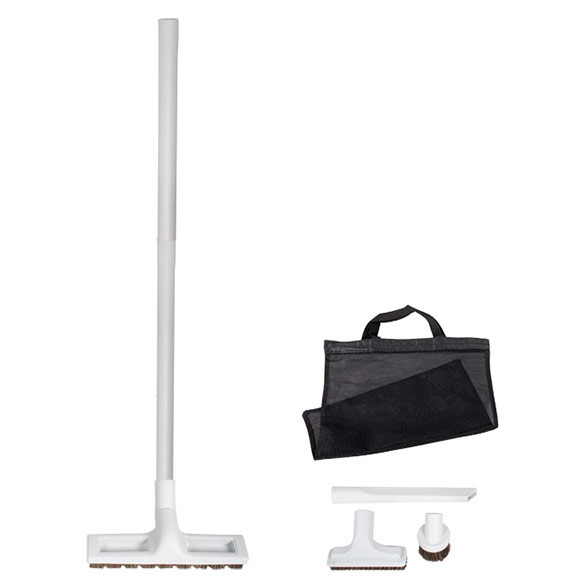
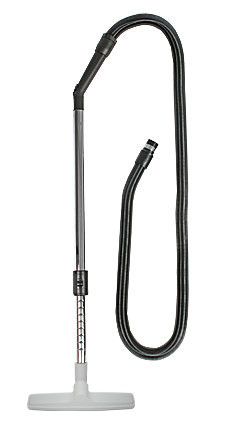
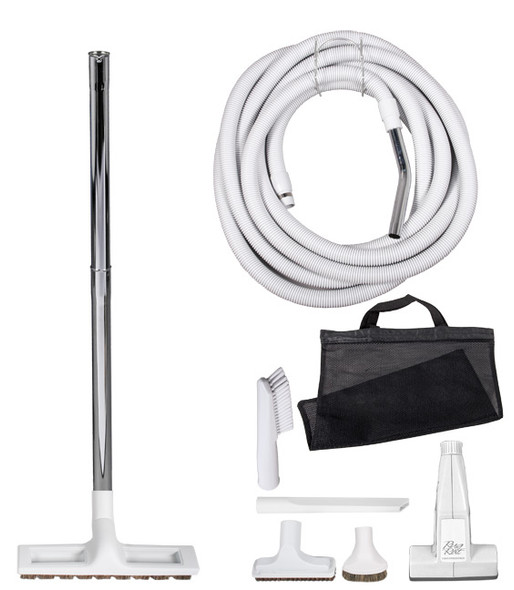
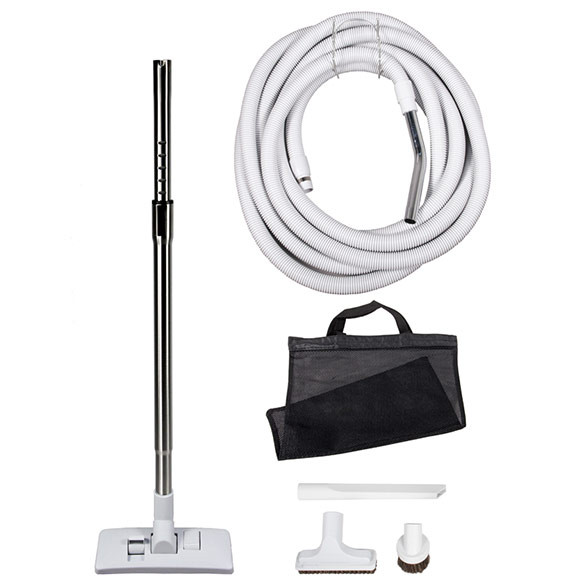
A complete air kit typically includes the following components:
- A flexible vacuum hose, available in 30-foot and 35-foot lengths to reach every corner of a room from a single inlet
- A telescopic wand that adjusts height for cleaning ceilings, baseboards, and under furniture
- An air turbine brush for carpet and rugs
- A hard floor tool for wood, tile, and laminate
- An upholstery tool for sofas, curtains, and fabric surfaces
- A crevice tool for tight gaps along baseboards, stairs, and vents
Why Choose an Air-Driven Vacuum Kit
No Extra Power, No Extra Weight
Because the turbine brush spins on suction alone, there are no motors inside the brush head and no electrical current running through the hose. That makes air kits noticeably lighter than electric alternatives. For anyone cleaning a multi-story home or running extended cleaning sessions, that weight difference adds up quickly.
Broader System Compatibility
Most air kits are designed to work with standard 1.25-inch and 1.5-inch central vacuum inlets, which cover the majority of central vacuum systems installed in American homes. If you have an older Budd, Whirlpool, or Sears-style inlet, look for kits with a tapered cuff hose. Our hoses category has several options that fit those legacy setups.
Affordable and Cost-Effective
Air vacuum kits cost less than electric kits because they do not require powered brush motors or electrified hoses, making them a budget-friendly choice for most homes.
Easy Maintenance
With fewer moving parts and no electrical components, air kits are simple to maintain and less prone to repairs.
Quieter Cleaning
Air-driven brush heads operate without a motor, providing a quieter cleaning experience than electric central vacuum kits and traditional upright vacuums.
Air Kits and Indoor Air Quality
The U.S. Environmental Protection Agency has noted that indoor air pollutant levels can run two to five times higher than outdoor levels and, in some cases, up to 100 times higher. Given that most people spend around 90 percent of their time indoors, the cleaning equipment you use matters.
Central vacuum systems improve cleaning performance by directing dust and debris to a remote collection unit rather than exhausting air back into the room. They can deliver significantly more suction power than portable vacuums, and a properly matched air kit helps maximize that performance across multiple floor surfaces.
The American Lung Association recommends using vacuums with strong suction and proper filtration as one of the most accessible steps toward healthier indoor air. Regular vacuuming with a capable central vacuum air kit is one straightforward way to act on that guidance.
What Is in a Classic Vacuum Air Kit
The Vacuum Hose
Our central vacuum hoses come in 30-foot and 35-foot lengths to give you full room coverage from a single wall inlet. Look for crush-proof construction and a 360-degree swivel handle to keep the hose moving freely without kinking. Pigtail and direct-connect styles are both available, depending on your inlet type.
The Telescopic Wand
The aluminum telescopic wand adjusts between roughly 27 inches and 40 inches, letting you reach ceilings, tops of cabinets, and under low furniture without stooping. A secure friction lock keeps it at your preferred length during cleaning.
The Air Turbine Brush
This is the working heart of any air kit. The turbine spins when suction flows through it, pushing bristles into carpet fibers and sweeping debris toward the intake. It performs well on low to medium pile carpet and transitions smoothly to area rugs. Keep the turbine inlet clear of large debris to maintain a consistent spin speed.
The Hard Floor Tool
A dedicated bare floor tool with non-marking rubber wheels and soft bristle handles for hardwood, tile, and laminate without scratching. It draws fine dust and grit into the airstream efficiently on smooth surfaces where the turbine brush is not needed.
Upholstery and Crevice Tools
Fabric upholstery tools lift pet hair and surface dust from sofas, chairs, and curtains. Crevice tools reach the gaps along stairs, baseboards, vents, and seat cushions. Browse our full range of central vacuum accessories to add specialty tools to your kit.
Air Kits vs. Electric Kits: Which One Fits Your Home
Choosing between an air kit and an electric kit comes down to your flooring type, your budget, and how much carpet agitation your home actually needs. Here is a straightforward comparison.
|
Feature
|
Air Kits
|
Electric Kits
|
|
Power source
|
Central vacuum suction only
|
Electrified hose plus powered brush motor
|
|
Best surface
|
Low to medium pile carpet, hard floors
|
Medium to thick pile carpet
|
|
Weight
|
Lighter, no motor in the hose or head
|
Heavier due to motor and wiring
|
|
Purchase cost
|
Lower upfront cost
|
Higher due to motor components
|
|
Maintenance
|
Fewer parts, simpler upkeep
|
Motor and belt service required
|
|
Noise at the cleaning end
|
Quiet, turbine only
|
Audible brush motor hum
|
|
Carpet grooming
|
Good for everyday cleaning
|
Better for deep grooming on dense carpet
|
If your home has mostly hard floors and some low-pile rugs, an air kit covers everything you need. If you have wall-to-wall thick carpet throughout, consider pairing your system with one of our electric kits for deeper agitation.
How to Choose the Right Air Kit for Your Home
Check Your Inlet Type
Most central vacuum systems use 1.25-inch or 1.5-inch inlets. Older systems may require a tapered hose cuff for proper compatibility.
Choose the Right Hose Length
A 30-foot hose works well for most homes, while a 35-foot hose offers greater reach for large rooms and open floor plans.
Match Your Flooring
Standard air kits are ideal for hardwood, tile, laminate, and area rugs. For homes with low- to medium-pile carpet, choose a kit with an adjustable air turbine brush for better cleaning performance.
Decide Whether You Need the Hose Included
Several kits on this page are available both as a full kit with hose and as a tools-only package for customers who already have a compatible hose in good condition. If your hose is functioning well, the no-hose version saves you money and skips the redundancy.
Match to Your Power Unit
Air kits do not require any electrical rating match, since they draw on suction only. However, pairing a full kit with a strong central vacuum power unit ensures the turbine spins at its designed speed. If your current power unit is undersized for your home's square footage, the turbine may spin slowly on longer hose runs.
Where Air Kits Perform Best
Everyday Whole-Home Cleaning
Air kits make it easy to clean carpets, rugs, hardwood, tile, and laminate floors throughout the home using a single lightweight system.
Stairs and Tight Spaces
The flexible hose and compact attachments provide easy access to stairs, corners, and other hard-to-reach areas.
Upholstery and Curtains
Specialized upholstery tools effectively remove dust, pet hair, and debris from furniture, drapes, and other fabric surfaces without causing damage.
Garages and Workshops
Many air kits work as a light-duty garage or workshop cleaning solution when your central vacuum inlet is accessible in that space. For dedicated garage cleaning, also check our Central Vacuum Parts and Accessories section for specialty tools designed around coarser debris.
Pet Owners
Pet hair on rugs and upholstery is where air kits earn extra points. The turbine brush lifts embedded fur from carpet fibers while the upholstery tool handles furniture surfaces. For homes with heavy shedding, look for kits that include a dedicated turbo pet brush.
Keeping Your Air Kit Running Well
Air kits are low-maintenance by design, but a few simple habits keep them performing at their best.
- Clear the turbine inlet regularly. Large debris, like hair wraps or string, can slow the brush or stop it from spinning. A quick check after each session prevents buildup.
- Store the hose without tight bends. Hanging it on a wall-mounted hose hanger or coiling it loosely prevents cracking along the inner wall over time.
- Check the hose ends for wear. A loose fit at the inlet or wand connection reduces suction. Replacement hoses are available in our central hoses section.
- Keep attachments clean between uses. A quick wipe with a damp cloth prevents cross-contamination between surfaces and keeps brush bristles flexible.
- Replace filters on your power unit on schedule. The air kit moves more debris through the system, so keeping your bags and filters current protects motor life and maintains suction at the brush.
Ready to Get More Out of Your Central Vacuum System
A well-matched air kit is one of the most cost-effective upgrades you can make to a built-in central vacuum setup. Whether you are replacing a worn-out attachment set or outfitting a freshly installed system, we carry air kits in a range of configurations to suit different homes, flooring types, and budgets.
Browse our full selection of central vacuum air kits online or reach out to our team directly. We have been helping homeowners get more from their central vacuum systems since 1981, and we are happy to walk you through the options that fit your specific setup.
You can also shop our full range of central vacuum tool kits, electric kits, central vacuum power units, and replacement parts and accessories to complete or upgrade your system from one place.