
Central Vacuum Losing Suction? Here's Why (and How to Fix It)
There's nothing quite as frustrating as running your central vacuum system and realizing it's barely picking up anything. You paid for a whole-home vacuum system precisely so you wouldn't have to deal with weak, sputtering suction. So when it starts happening anyway, it's worth figuring out why before you assume the worst.
The good news: most suction problems come down to a handful of common culprits, and several of them are things you can check yourself in a few minutes. At Classic Vacuum, this is one of the most common service calls we get, so here's what's likely going on, how to track down the cause, and when it's time to bring in a professional.
Common Causes of Low Suction
For a refresher on how the whole system fits together (power unit, piping, inlets, and hose), HowStuffWorks has a solid breakdown of the mechanics before we get into what can go wrong.
A Full or Dirty Canister
This is the single most common reason for weak suction, and it's the first thing to rule out. Central vacuum systems collect dirt and debris in a canister or dirt bin located in the power unit, usually tucked away in a garage, basement, or utility closet. Because it's out of sight, it's easy to forget about, and once it fills past a certain point, airflow drops noticeably. Some systems fill up faster than others depending on household size, pets, and how often the system runs. If it's been more than a few weeks since you last emptied it, start there.
A Clogged Inlet Valve or Pipe Blockage
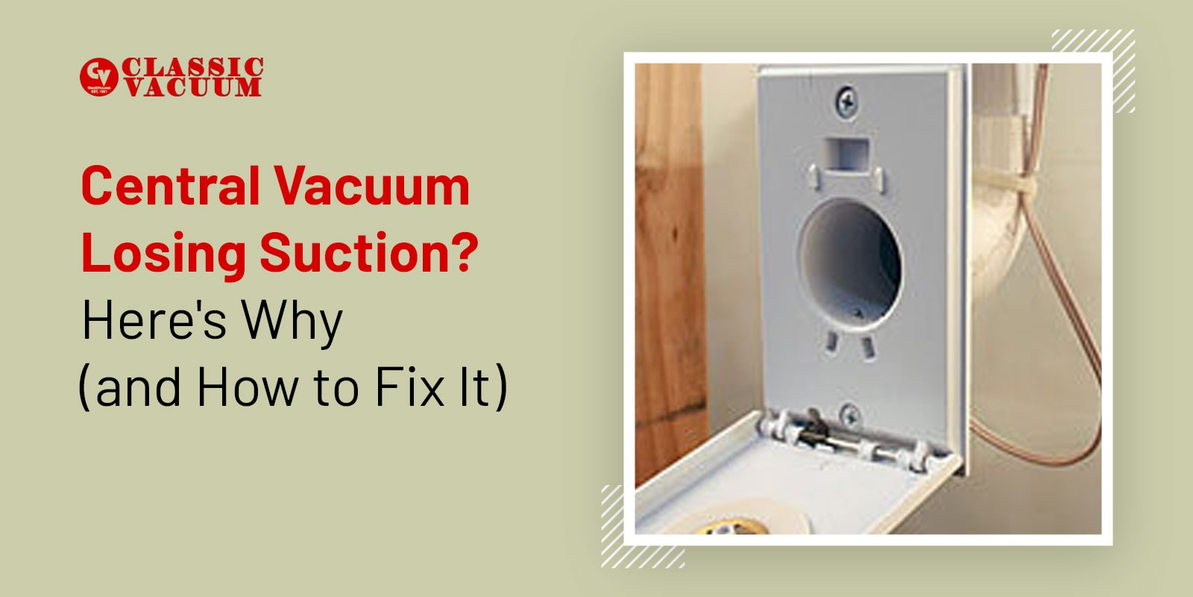
Central vacuum systems rely on a network of PVC piping running through your walls, connecting each wall inlet back to the power unit. Blockages can form anywhere along that path: a wad of paper, a sock, pet hair matted together, or even a child's small toy. When something gets lodged in the pipe or at the inlet valve itself, it restricts airflow just like a clogged straw. Suction loss from a blockage is often isolated to specific inlets rather than the whole house, which is a useful clue when you're troubleshooting.
Hose Leaks, Kinks, or Cracks
The flexible hose you plug in and carry from room to room takes a lot of abuse over the years. It gets bent, stepped on, and dragged across furniture. Cracks, small holes, or a damaged connector at either end can all cause air to leak out before it reaches the canister, which weakens suction even if everything else in the system is working perfectly. Hose problems are also one of the easiest fixes, since a full hose replacement is usually inexpensive.
A Dirty or Worn Filter
Most central vacuum systems use either a cloth filter, a HEPA filter, or a filterless cyclonic design. If your unit has a filter, it needs periodic cleaning or replacement, since a filter caked in fine dust restricts airflow through the entire system (even if the canister isn't full). This is easy to overlook because a dirty filter doesn't always look obviously clogged at a glance. The EPA's overview of HEPA filtration is a useful reference if you're weighing filter types when it's time to replace one.
Loose Pipe Joints or Air Leaks
Over time, PVC pipe joints and fittings can loosen slightly, especially in homes that have settled or where the vacuum lines run through areas with temperature swings. A loose joint creates a small air leak, and central vacuum systems depend on a sealed airflow path to generate strong suction. Even a small leak partway through the pipe run can noticeably weaken performance at every inlet downstream of it. Manufacturers generally spec central vacuum tubing to a dedicated ASTM standard rather than repurposed plumbing pipe, which is part of why properly rated tubing matters for long-term performance.
Motor Wear or an Aging Unit
If you've ruled out clogs, leaks, and filters and suction is still weak, the motor itself may be wearing out. Central vacuum motors are built for a long service life (often 10 years or more), but they don't last forever. Carbon brush wear, bearing wear, and general age-related decline in motor performance all show up as gradually weakening suction rather than a sudden failure, which is why this cause often gets misdiagnosed as "just needs cleaning" for longer than it should.
How to Diagnose the Problem Yourself
Before assuming the worst, a few simple checks can narrow down what's actually happening.
- Test Suction at Each Inlet: Plug the hose directly into a wall inlet near the power unit and check suction, then try an inlet farther away. If suction is strong near the unit but weak at distant inlets, you're likely looking at a leak or blockage somewhere in the piping between them.
- Listen for Hissing or Whistling: A leak in the hose, at a pipe joint, or around the canister lid often makes a faint hissing sound when the system is running. Walk the length of exposed hose and check accessible pipe connections for this telltale noise.
- Inspect the Hose End-to-End: Look for visible cracks, and check that both connector ends fit snugly. A hose that feels loose when you plug it in is a strong sign the seal isn't tight.
- Open the Canister: This takes thirty seconds and rules out the most common cause immediately.
DIY Fixes You Can Try
Several of the most common causes are fixable without calling anyone in.
- Empty and Clean the Canister: Remove built-up debris and wipe down the canister walls, since dirt can stick even after the bulk of it is dumped out.
- Clear Pipe Blockages: A shop vac run in reverse at the inlet, or a plumber's snake fed gently through the line, can dislodge most blockages. Start with the inlet showing the weakest suction.
- Reseal Loose Pipe Joints: PVC cement or central-vacuum-specific sealant can fix minor leaks at accessible joints, particularly around inlet valves.
- Replace the Filter: If it's visibly dirty or you can't remember the last time it was changed, replace it. Filters are inexpensive relative to the performance difference they make.
- Swap out a Damaged Hose: If the hose shows cracks or a loose-fitting connector, a replacement hose is often the fastest fix available.
When to Call a Professional
Some problems aren't practical to tackle yourself. If suction is weak at every inlet even after emptying the canister and replacing the filter, the issue may be inside the power unit itself. This includes worn motor brushes, a failing relief valve, or wiring problems with the low-voltage control system that tells the unit when to turn on. Pipe blockages located deep inside a wall, rather than near an accessible inlet, also usually call for a technician with the right tools to clear them without damaging the wall. If you're hearing unusual grinding or burning smells from the power unit, stop using the system and get it inspected before running it again.
Preventing Future Suction Loss
A little routine maintenance goes a long way toward avoiding suction problems altogether:
- Empty the canister on a regular schedule rather than waiting until it's completely full
- Replace or clean the filter every few months, depending on usage
- Do a quick visual hose inspection periodically for cracks or loose fittings
- Avoid vacuuming large debris, string, or small objects that are prone to causing blockages
- Schedule a professional tune-up every year or two to catch wear before it becomes a bigger repair
FAQs
1. Why does my central vacuum lose suction over time?
Gradual suction loss is usually caused by a combination of dirt buildup in the canister or filter and normal wear on the motor. It rarely happens all at once, which is why it's easy to not notice until performance has dropped significantly.
2. Can a full canister really cause that much of a difference?
Yes. A canister that's too full restricts the airflow the whole system depends on, and it's the most common cause of a sudden drop in suction.
3. How do I know if my central vacuum motor is failing?
Signs include suction that stays weak even after cleaning the canister and filter, unusual noise from the power unit, or suction that's weak at every single inlet rather than just one or two.
4. Is fixing low suction usually a DIY job?
Often, yes. Canister cleaning, filter replacement, and hose swaps are all manageable without help. Motor issues and blockages deep in the wall piping are better left to a professional.
Noticing consistently weak suction even after checking the basics? The team at Classic Vacuum can pinpoint exactly what's going on and get your system back to full strength. Schedule a service visit today.
Recent Posts
-

SEBO Vacuum Cleaner: The Complete Buying Guide
A good vacuum should make cleaning easier today and still make sense years from now. SEBO has built …16th Sep 2026 -

The Hidden Air Pollutants in Your Home (and How to Remove Them)
You can't smell most of what's actually polluting your air. The obvious stuff (cooking smoke, a must …9th Sep 2026 -

Top Riccar Models for Homes With Dogs and Cats
If you share your home with a dog, a cat, or both, you already know the drill: hair on the couch, da …2nd Sep 2026